Blog
How to Choose Jewelry Materials: A Practical Guide for Real Buyers

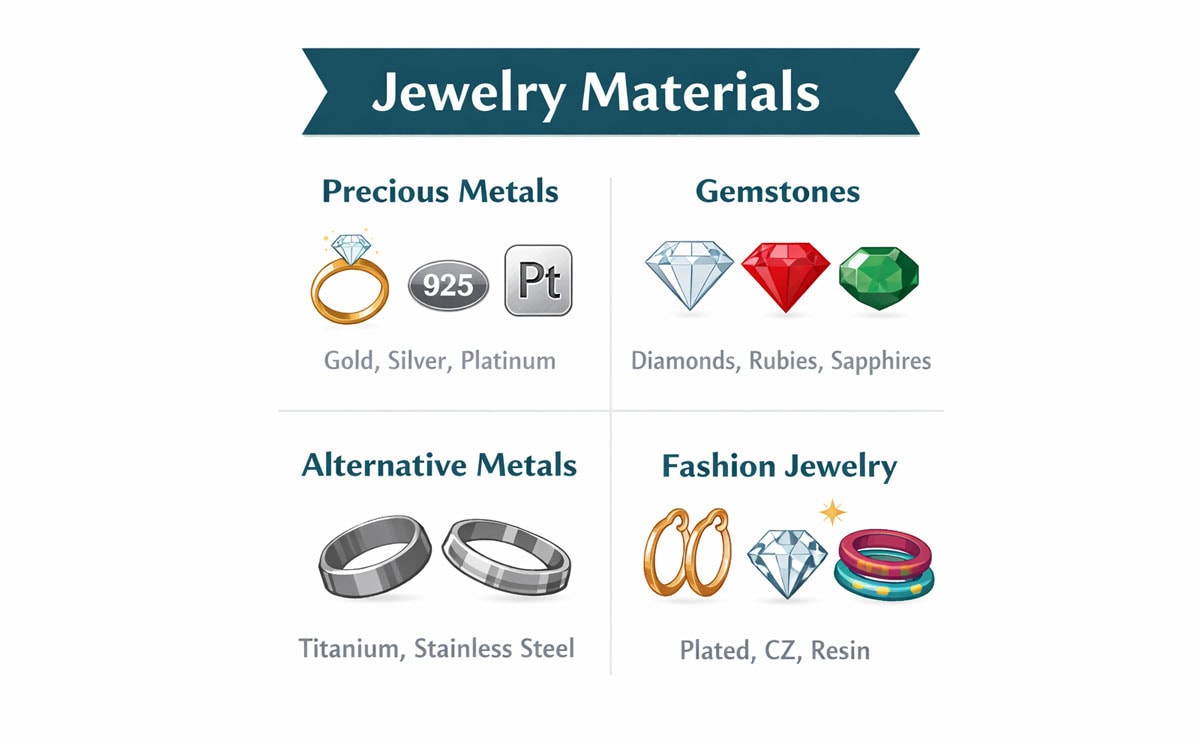
Most people don’t actually have a “style problem” when buying jewelry.
They have a material problem.
It usually goes like this:
You find a piece you love, the price looks good, you place the order… and a few weeks later, it fades, scratches, or worse—your skin reacts to it.
That’s not bad luck.
That’s choosing the wrong material.
This guide isn’t here to list definitions.
It’s here to help you pick the right jewelry material for how you actually live.
1.Gold: Looks Expensive — But Which One Should You Really Buy?
Let’s get straight to the point:
-If you want something that looks premium and lasts, go for 18K gold
-If you wear jewelry every day and don’t want to think about it, 14K gold is the smarter choice
Here’s why.
18K Gold (75% gold)
It has that rich, deep color people associate with “real gold.” It’s perfect for rings, necklaces, or anything you want to feel a bit more special.
But it’s softer. If you’re rough with your jewelry, it will show wear.
14K Gold (58.5% gold)
Less “luxury-looking,” but much tougher.
If you’re the type who showers, works, and travels without taking jewelry off — this is the safer bet.
👉 Simple rule:
Care about look → 18K
Care about durability → 14K
2.Sterling Silver: Good Choice — If You Accept One Thing
Sterling silver (S925) is one of the most popular materials for a reason:
-Affordable
-Clean, bright look
-Easy to match with anything
But there’s one thing you need to accept:
👉It will tarnish.
Not “might.” It will.
That doesn’t mean it’s bad quality. It just means you’ll need to:
-Wipe it after wearing
-Store it properly
-Occasionally polish it
If you’re okay with a bit of maintenance, silver is a great value.
If you want something you never have to think about, look elsewhere.
3.Platinum: For People Who Don’t Want to Replace Jewelry
Platinum is not about trends. It’s about long-term ownership.
-It doesn’t fade
-It doesn’t lose color
-It’s naturally hypoallergenic
That’s why people choose it for engagement rings or pieces they plan to wear for years.
But here’s the honest part:
👉 It’s heavier
👉 It’s more expensive
👉 And visually, most people can’t tell it apart from white gold
So unless durability and skin sensitivity really matter to you, you don’t have to go platinum.
4.Stainless Steel & Titanium: The “No Stress” Option
If you’ve ever bought jewelry that:
-Changed color
-Caused skin irritation
-Or broke too easily
Then you’ll understand why these materials are getting popular.
Stainless Steel
-Strong
-Doesn’t tarnish
-Very affordable
Titanium
-Extremely lightweight
-Skin-friendly (used in medical applications)
-Highly corrosion-resistant
👉 These are not “luxury” materials.
But they are practical, reliable, and low-risk.
Perfect for everyday wear, especially if you don’t want maintenance.
5.Gemstones: Don’t Just Buy What Looks Good
Most buyers focus on appearance.
Smarter buyers think about durability and value.
Diamonds (Natural or Lab-Grown)
Let’s be real:
Lab-grown diamonds are becoming the rational choice.
-Same physical properties as natural diamonds
-30–50% cheaper
-No ethical concerns
Unless you specifically care about rarity, lab-grown is simply better value.
Moissanite: The Underrated Alternative
If your goal is sparkle, not status:
👉 Moissanite actually shines more than diamond
-Brighter fire (more rainbow reflection)
-Much cheaper
-Durable enough for daily wear
For many buyers, this is the smartest visual upgrade per dollar.
Pearls: Beautiful but High Maintenance
Pearls look elegant, but they are not practical.
-Sensitive to sweat, perfume, and chemicals
-Can lose luster over time
If you choose pearls, treat them as occasion jewelry, not daily wear.
6.The Biggest Trap: “Looks Like Gold” Jewelry
This is where most people get burned.
Gold-plated jewelry looks great at first because it is real gold — just extremely thin.
Over time:
-The gold layer wears off
-The base metal shows
-Color changes
👉 If the price feels “too good for gold,” it’s probably plated.
Not necessarily bad — just don’t expect it to last.
7.If You Have Sensitive Skin — Read This Carefully
A lot of cheap jewelry contains:
-Nickel
-Lead
These can cause itching, redness, or long-term irritation.
👉 Safer choices:
-Titanium
-Platinum
-High-quality stainless steel
If you’ve ever had a reaction before, don’t gamble here.
8.A Simple Way to Choose (Based on Your Lifestyle)
If you don’t want to overthink it, use this:
-Daily wear, no maintenance: Stainless steel / Titanium
-Balance of quality & durability: 14K gold
-Premium look & feel: 18K gold
-Long-term, sensitive skin: Platinum
-Best sparkle for budget: Moissanite or lab-grown diamond
Final Thought
Good jewelry isn’t about picking the most expensive material.
It’s about choosing something that actually fits how you live.
Most bad purchases happen when people buy based on appearance alone.
Smart buyers look one step deeper:
👉 Will this still look good after months of real use?
If the answer is yes, you’re making the right choice.